
Tips from the Educators’ Guide to Depolarisation
February 20, 2025
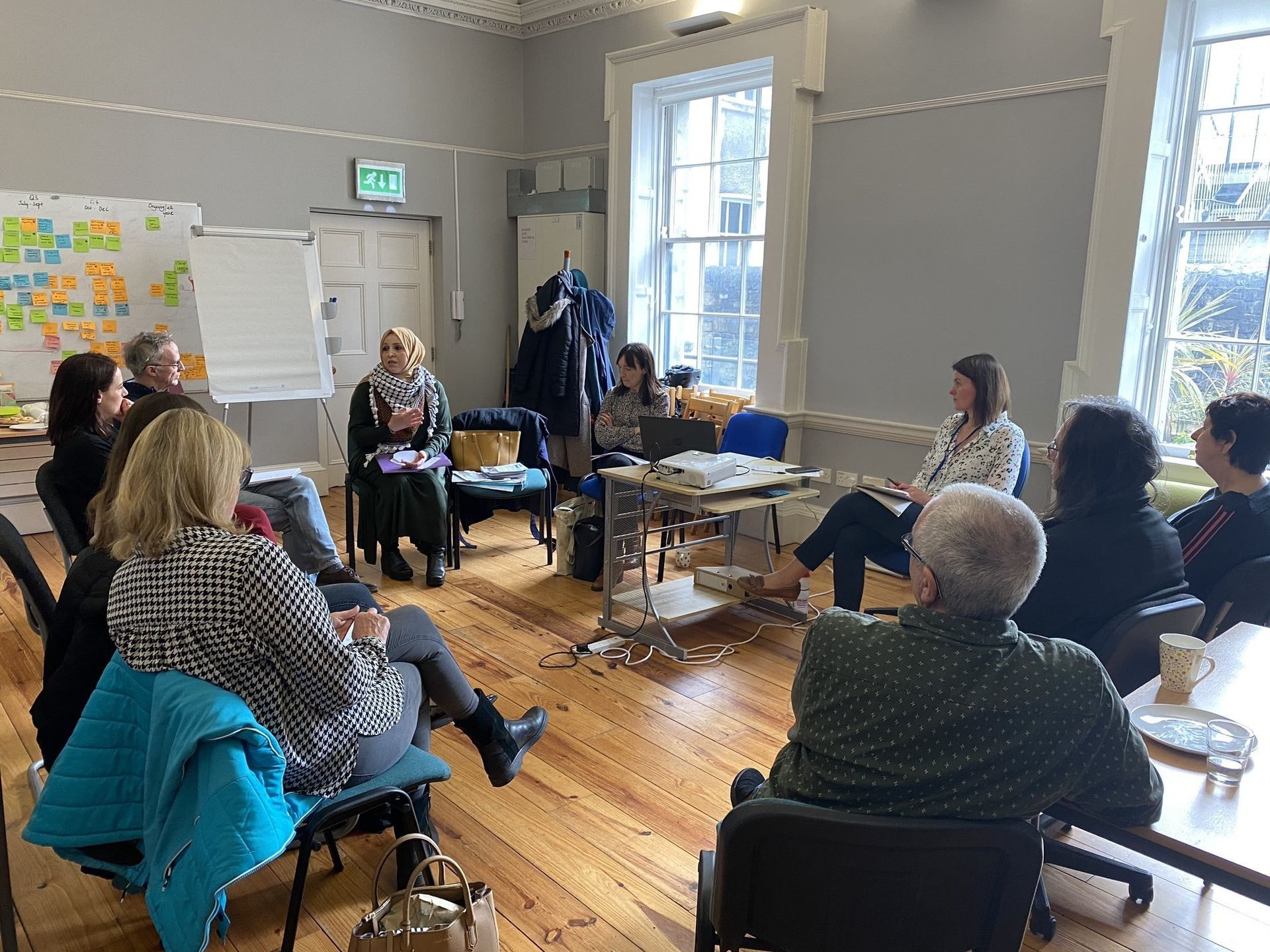
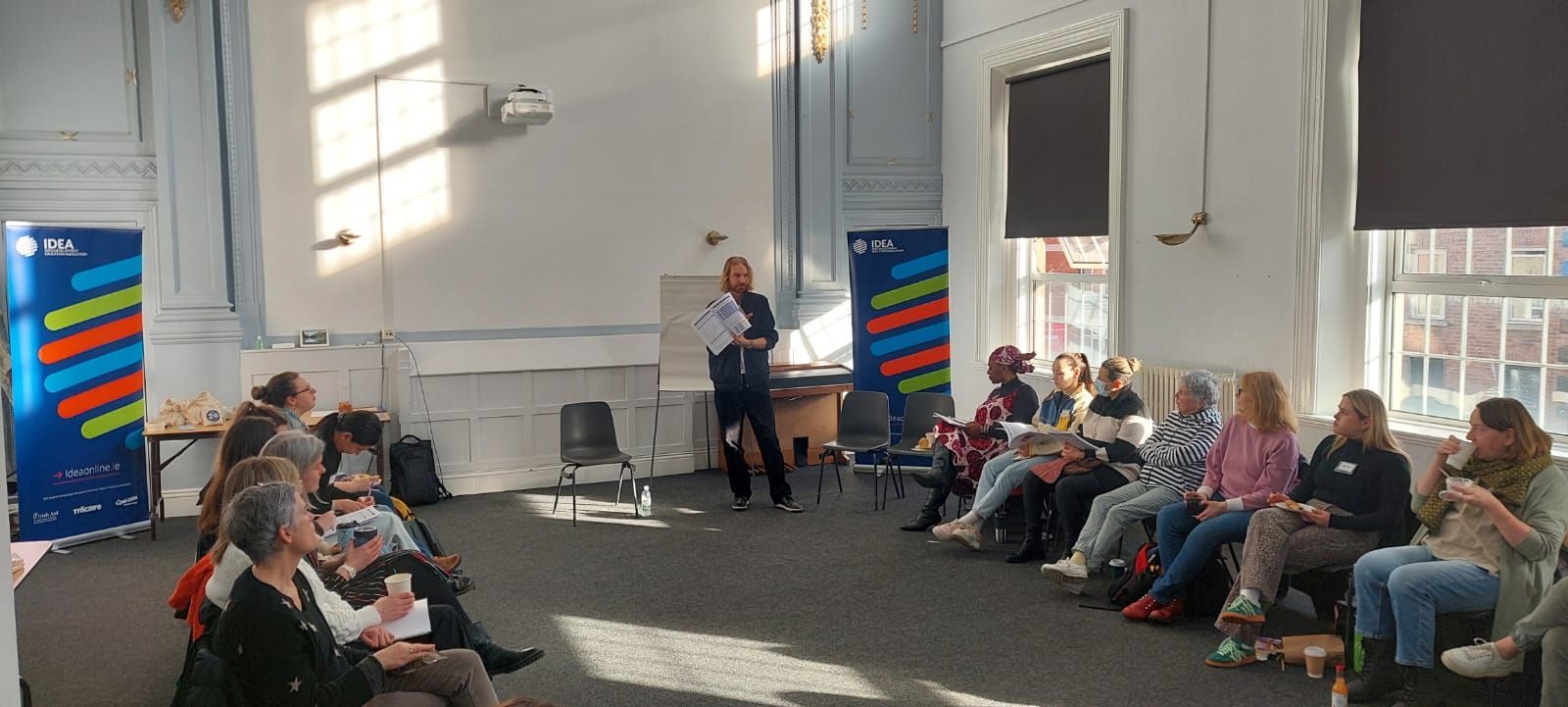
People seated in a bright meeting room listening to a speaker near the front

Whether it’s local immigration policy, global trade tariffs or transgender policies the world seems to be at odds. As educators we often work with groups where the participants have polar opposite views on many issues. A group of people may see the world so differently but what happens when we want that group to work together, build a connection or feel safe and inclusive for everyone? Recently IDEA hosted training on the Educator’s Guide to Depolarisation, a toolkit and guide developed by the DARE Project (Depolarisation Activism for Resilient Europe). The room was full of energy and enthusiasm. But given the reality facing our world today feelings of concern and fear for the future were also expressed. With good reason.
The Educators’ Guide to Deploratisation, a 2-day training, looked to enhance IDEA members’ skills in successfully engaging with polarising topics and views and establishing a dialogue where before there was only opposition. At depolarisation training we approach conflict as an interpersonal and social inevitability rather than something that should be avoided to ‘keep the peace’. We then focus on our own power to transform disagreement and diversity of views into constructive engagement.   How to convince people to think like us? One of first steps many of us struggle with when we begin to explore depolarisation, even with our own professional experience as GCE educators, is letting go of the desire to make everyone think like us and agree with us. Our desire to make the world a better place can often stand in our way. This desire can prevent us from connecting with other people and their views. But connection is critical for depolarisation.   Dialogue vs Debate? Some tips from the Educators’ Guide to Depolarisation training includes the ‘Debate vs Dialogue’ challenge. When you are in conversation with a colleague or facilitating a conversation with a group you need to identify is this ‘a dialogue’ or ‘a debate’. Do you know the difference?   Do you want to win the argument? or Do you want to understand different perspectives?     Are you listening to find flaws? or Are you listening to understand?   Are you speaking based on your assumptions about other people’s motivations? or Are you speaking only from your own understanding?   Depolarisation; No winners, only learners. To learn more about having or facilitating difficult discussions the Educators’ Guide to Depolarisation provides tools to guide educators through uncomfortable conversations. A group will get closer by learning and asking questions of each other rather than simply stating their own beliefs. So, what’s the origin of our different beliefs? Is a group disagreeing on immigration/ Trump/ transgender policies?
Try to have a difficult conversation by asking both sides 5 questions. 
  1. Do you recall when you heard about or experienced this issue first?
  2. Why is this so important and difficult to just 'agree to disagree'? 
  3. Mirror as best you can what you have heard from your conversation partner- why is this so important?
  4. If you woke up tomorrow in a world where the opposite of your belief is the status quo- how would you feel?
  5. Is there a way to prevent this issue?
Finally, ask people to reflect what they have learned from each other.   Being able to have a dialogue that doesn’t descend into a debate with winners and losers is one big step for any group. Along the journey to depolarisation there can be no winners, only learners.
If you missed the IDEA training with Hermes, explore the Educators’ Guide to Depolarisation training, toolkit and resources here

Related Articles

Related Articles

September 26, 2026
Date: Tuesday 01 December, 10.00am – 3.30pm Location: Richmond Barracks, Inchicore, Dublin 8, D08 YY05 IDEA is looking forward to welcoming all members of the Code of Good Practice for Development Education to our next Code network meeting on Tuesday 1 December, in Richmond Barracks in Inchicore, Dublin. There are places for two representatives, staff, volunteers, etc., from each Code member. One of the commitments in joining the Code is to contribute to the Community of Practice for this Code, including sharing successes and learning with other Code members and attending at least one of two Code network meetings annually. If you have questions, please contact code@ideaonline.ie.

Globe held by two white hands against a dark blue background
September 23, 2026
Explore research on Global North-South partnerships in Global Citizenship Education. Join us in shaping equitable educational practices.

Man in a pink sweater speaking into a megaphone against a blue background
September 23, 2026
IDEA seeks a consultant to analyze pilot data for the GCE tool. Apply by October 6 with your CV & proposal.

Blue United Nations flag waving on a flagpole against a cloudy sky
September 22, 2026
IDEA, Afri, & Talamh Beo call for action on UNDROP renewal. Support rural rights & sustainable food systems. Join us in advocating today!

Colorful dots arranged into a question mark on a bright yellow background
August 26, 2026
Join us on October 14 to discuss economic alternatives in GCE. Register now for insights on neoliberal critiques!

Light bulb centered on a chalkboard with six empty thought bubbles around it.
August 25, 2026
Join us on September 22 for the Innovation Showcase Lunch. Share innovative ideas for Global Citizenship Education with fellow members.
Palestinian flag with red triangle, black, white, and green horizontal stripes waving
August 20, 2026
IDEA urges the Irish government to expedite student visas for Gazan students. Take action to support their education today!
Abstract logo of seven tilted rounded bars in blue, green, orange, and red on white background
July 30, 2026
IDEA is hiring a Communications Manager to lead strategic communications & public engagement. Apply by September 17 to make an impact!

Colorful globe of Africa framed by green leaves and branches
By Éimear Green • July 17, 2026
Apply for a research consultancy on Global North-South partnerships in GCE. Deadline: August 13, 2026. Budget: €6,000.

Hands holding a blue-green globe on a white background, with an IDEA logo in the corner.
July 10, 2026
Budget 2027 comes at a time of significant global uncertainty and intensifying global and local challenges.